Blog
How Can a Person Challenge an Unfair or Biased Criminal Investigation in India?
Dated On: November 11, 2026
Author:
Author:
Please fill in the form below and our team will get in touch with you.
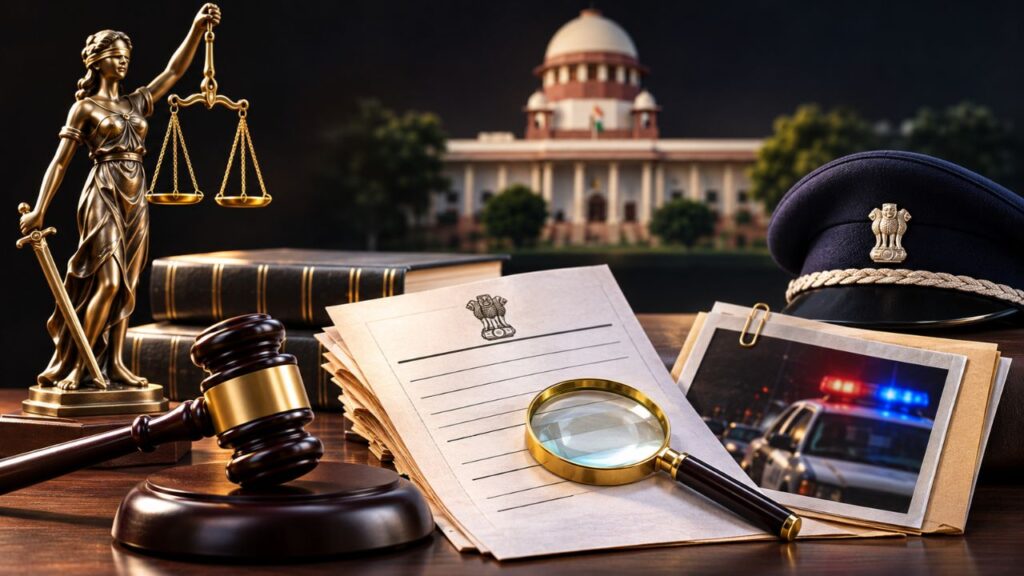
An unfair criminal investigation can have serious consequences for a person’s liberty, reputation, career and family. When investigators ignore evidence, selectively question witnesses, delay collecting crucial material or pursue a predetermined theory, the accused may feel powerless. However, Indian law provides several safeguards against investigative bias. A person facing an unfair criminal investigation can seek legal intervention, challenge unlawful investigative actions, request appropriate further investigation and, in suitable cases, approach the High Court or Supreme Court for relief.
The appropriate remedy depends on the stage of the case, the nature of the alleged misconduct and the evidence available. Understanding these options early can help protect legal rights without obstructing a lawful investigation.
An investigation may be considered unfair when the investigating agency fails to act impartially, disregards material evidence, relies on unreliable statements or uses its powers for an improper purpose. Examples include refusing to examine evidence supporting the accused’s account, pressuring witnesses, selectively recording statements, conducting unlawful searches or targeting a person without a legitimate evidential basis. Not every investigative mistake amounts to deliberate bias or legal misconduct. Investigators may pursue reasonable lines of inquiry even when the accused disagrees with them. The central issue is whether the investigation complies with the law and the constitutional requirement of fairness.
Article 21 of the Constitution of India protects life and personal liberty. The Supreme Court has repeatedly recognised the importance of a fair investigation and fair trial as components of constitutional protection. An investigation which is demonstrably biased, arbitrary or designed to secure a predetermined outcome may therefore warrant judicial scrutiny.
Indian law provides several routes to challenge investigative misconduct. The correct remedy depends on whether the police are still collecting evidence, have filed a final report, or the criminal trial has already begun.
A practical first step is to submit a detailed written representation to the Superintendent of Police, Commissioner of Police or another competent supervisory authority. The complaint should identify specific investigative failures, explain their effect on the case and request appropriate corrective action. For example, a person may explain how investigators ignored CCTV footage, failed to question a material witness or relied on contradictory statements without examining the inconsistency. Supporting documents, dates and copies of earlier representations make the complaint more persuasive.
The request may seek supervisory review, preservation of evidence, examination of omitted witnesses or reassignment of the investigation where legally justified. Keep proof of delivery and copies of all correspondence. A complaint to senior officers does not guarantee a change of investigating officer, but it creates a documented record of the alleged unfairness.
Where police fail to act on information about a cognisable offence, the aggrieved person may consider approaching the jurisdictional Magistrate under Section 175(3) of the Bharatiya Nagarik Suraksha Sanhita, 2023 (BNSS), subject to its procedural requirements. This provision concerns orders for investigation. It should not be confused with an unrestricted right to demand a particular investigating officer or a specific outcome. The Magistrate must consider the applicable statutory conditions and the material presented.
If an investigation is already underway, the appropriate application will depend on the circumstances. The person should explain the alleged legal or procedural failure and identify the action the court can lawfully direct. The BNSS has been in force since 1 July 2024, although proceedings initiated under the previous Code of Criminal Procedure may be governed by transitional provisions. The official India Code database provides access to the statutory text.
The High Court can be approached under Article 226 of the Constitution in an appropriate case involving unlawful state action or a demonstrably unfair investigation. It also has inherent powers under Section 528 of the BNSS to make orders necessary to give effect to the Sanhita, prevent abuse of the process of a court or secure the ends of justice. Depending on the facts, a petition may seek directions for a fair investigation, independent monitoring, transfer to another agency or quashing of an FIR or criminal proceedings where the legal requirements are met.
However, the High Court does not ordinarily replace the investigating officer’s judgement with its own merely because one party disputes the evidence. Judicial intervention is more likely to be justified where the material demonstrates a serious failure of fairness, abuse of process or a real risk of miscarriage of justice. A transfer to the Central Bureau of Investigation (CBI) or another independent agency is an exceptional remedy, not an automatic consequence of alleging police bias. The court will consider the seriousness of the allegations, the supporting material and whether the requested intervention is necessary to secure justice.
An investigation may remain defective even after the police submit a charge sheet. If material evidence was omitted or significant new evidence emerges, further investigation may be possible under Section 193(9) of the BNSS. The provision permits further investigation after submission of the police report, with additional procedural requirements where investigation continues during trial. A person seeking further investigation should identify the missing evidence, explain why it matters and show how obtaining it could assist in determining the truth. A general assertion that the police have acted unfairly may not be sufficient.
The court must distinguish further investigation, which supplements the existing investigation, from a fresh or de novo investigation, which is an exceptional measure. The applicable procedure also depends on the stage of the case and the precise relief sought.
The Supreme Court has consistently recognised fair investigation as an essential part of criminal justice. In Babubhai v. State of Gujarat (2010), the Court emphasised that an investigation must be fair, transparent and judicious. It recognised that courts may intervene when a biased investigation threatens to result in a miscarriage of justice. The judgment is particularly relevant where an investigating agency appears to favour one side, overlooks significant material or conducts the investigation with an improper motive. It also makes clear why judicial intervention must be grounded in the circumstances of the particular case rather than unsupported allegations.
The decision can be read on Indian Kanoon. The practical lesson is straightforward: courts protect the integrity of the investigative process, but they do not treat every inconsistency, delay or adverse decision as proof of bias. A convincing challenge connects identifiable failures with the legal duty to investigate fairly.
A successful challenge usually requires more than a belief that the police have reached the wrong conclusion. The person should assemble objective material demonstrating specific investigative failures and their potential impact on the case. Relevant material may include copies of written complaints, acknowledgements, court orders, notices, communications with investigators, available CCTV recordings, relevant medical records and details of witnesses who have not been examined. A dated chronology can help identify inconsistencies and show whether the omissions form a concerning pattern.
Preserve original documents and electronic records wherever possible. Do not alter files, coach witnesses, threaten investigators or obtain evidence unlawfully. Such conduct can undermine an otherwise legitimate complaint and may expose the person to separate legal consequences. A lawyer can help determine whether the available material supports a representation to senior officers, an application before a Magistrate or a constitutional petition. Experienced criminal lawyers for unfair investigations can also assess whether the alleged misconduct warrants a request for independent investigation or another proportionate remedy.
Digital evidence can be especially important where an allegation concerns online fraud, unauthorised access, financial transactions, impersonation or the misuse of electronic communications. A fair investigation should examine relevant technical material, including server logs, transaction records, device data, timestamps and available access records, where relevant and lawfully obtainable. Investigators should assess both incriminating and exculpatory material rather than relying on isolated screenshots or unverified claims.
Individuals should preserve relevant emails, messages, transaction references and original files without tampering with devices or attempting unauthorised access. Requests for preservation may be particularly urgent where service providers retain records for limited periods. In appropriate cases, cybersecurity lawyers for cybercrime defence can help evaluate digital evidence, identify gaps in the investigation and advise on lawful steps to preserve material that may support the defence.
The immediate priority is to protect legal rights while avoiding actions which could prejudice the case. Obtain and preserve available documents, record investigative omissions with dates, comply with lawful notices and seek legal advice before making detailed statements where the circumstances warrant it. If there is a risk of arrest, obtain urgent advice on the availability of anticipatory bail or other appropriate protection. Do not assume that filing a complaint against the investigating officer automatically suspends an investigation, prevents arrest or invalidates an FIR.
The remedy should match the problem. A missing witness may call for a targeted request for further investigation, while demonstrable bad faith or a serious risk of miscarriage of justice may justify approaching a constitutional court. The objective is not to obstruct a lawful investigation, but to ensure that the truth is examined through a lawful and impartial process.
An unfair criminal investigation can threaten personal liberty and undermine confidence in the justice system. Indian law provides remedies through supervisory police authorities, Magistrates and constitutional courts, but the appropriate route depends on the facts and procedural stage of the case. The strongest challenge identifies specific investigative failures, supports them with reliable material and seeks relief permitted by law. Timely legal advice can help protect the person’s rights while ensuring the investigation remains focused on establishing the truth.
Yes. You may submit a documented complaint to the competent supervisory police authority and, where appropriate, seek judicial intervention. The authority or court will assess the evidence and the applicable legal framework before deciding what action is justified.
Yes, in exceptional circumstances. The High Court may order an independent, transferred or fresh investigation where the legal requirements are satisfied and intervention is necessary to prevent a miscarriage of justice. Such orders are not granted merely because an accused person disputes the police's conclusions.
An FIR or criminal proceedings may be quashed where the circumstances satisfy the applicable legal principles, including those governing abuse of process or the absence of a legally sustainable case. Alleged investigative bias alone does not automatically invalidate an FIR.
You may request a transfer to the CBI or another appropriate agency, but the decision rests with the competent authority or court under the applicable law. Such transfers are generally reserved for cases where the circumstances justify intervention.
No. Investigative irregularities do not automatically establish innocence or require acquittal. The court examines the nature of the irregularity, its effect on the proceedings, the admissible evidence and the applicable legal principles.
Preserve the evidence, document when and how it was brought to the investigators' attention, and seek legal advice on the appropriate remedy. Depending on the stage of the case, this may involve a written representation, an application for further investigation or a petition before the competent court.








The rules of the Bar Council of India regulate the professional conduct of advocates and impose restrictions on advertising and solicitation. Accordingly, Clarvis Legal is constrained from providing certain information on this website beyond what is permissible under the applicable rules.
By clicking "I AGREE", you acknowledge and confirm that:
If you do not agree with the above terms, please click "I DISAGREE" or exit this website.